Violin Acoustics is for makers, musicians, and researchers interested in the science of violin-family instruments.
We host monthly Zoom Presentations and annual in-person Workshops. In Resources you will find reliable information about violin acoustics. Measurement covers the equipment, software, and procedures needed to acquire useful data. Archives is a repository for scientific research.
First Friday Zooms

Experimental investigation of violin bridge admittances, Raffaele Malvermi, February 6, 2026
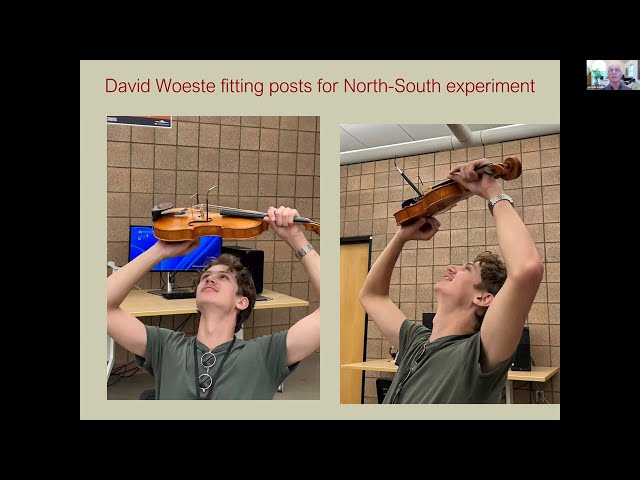
Soundpost adjustment effect on violin radiativity & admittance, Joseph Curtin/Luca Jost Nov 7, 2025

What does the soundpost do, and shy is it so sensitive to adjustment? Jim Woodhouse, Sept 5, 2025
About the Violin Acoustics Foundation
This site is presented by the Violin Acoustics Foundation, a 501(c)(3) non-profit corporation devoted to the science of violin-family instruments. It exists to encourage scientific research, and to share findings in a form accessible to violinmakers and players.
The foundation is an outgrowth of the VSA-Oberlin Acoustics Workshop, founded in 2001 by Fan-Chia Tao and Joseph Curtin, sponsored by the Violin Society of America, and hosted by Oberlin College. The workshop brings together makers and researchers annually for a week of talks and hands-on experiments.
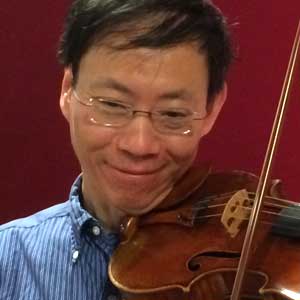
Fan-Chia Tao
President/Workshop Co-Founder
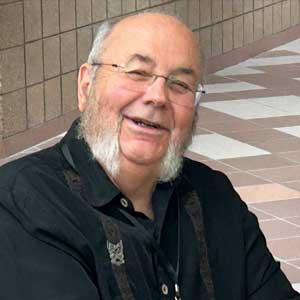
Evan Davis
Secretary
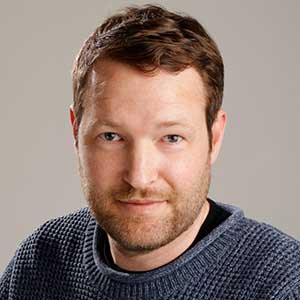
Tom Nania
Treasurer
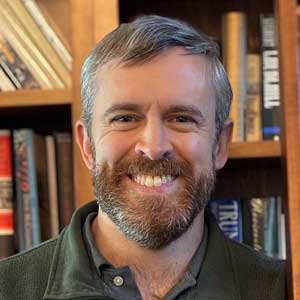
Sean Hardesty
Board Member
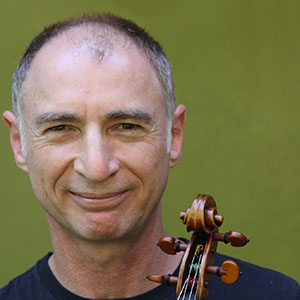
Joseph Curtin
Workshop Co-Founder
Fan-Chia Tao, co-director of the Acoustics Workshop, is Director of Research and Development at D’Addario & Company, where he designs strings for bowed-string instruments and guitars. His deep interest in violin acoustics was fostered by his mentor Norman Pickering, who originally invited him to join D’Addario. Tao is an accomplished amateur violinist and violist with an abiding interest in chamber music. He holds electrical engineering degrees from Caltech and Princeton University, is a Trustee of the CAS Forum (formerly the Catgut Acoustical Society) and a past President of the Violin Society of America.
Evan Davis was a Technical Fellow at the Boeing Commercial Aircraft Company, where he led their structural acoustics research group. He is a recognized expert in the field of Statistical Energy Analysis, a method for modeling and analyzing complex structural acoustic responses in the mid-to-high audio frequency range. His early fascination with guitars led to the construction of several instruments, and to a PhD in guitar acoustics from the University of Washington. He joined the Catgut Acoustical Society in 1976, and is on the Editorial Board of the VSA. Davis has worked with some of world’s leading guitar builders on ‘out of the box’ projects. He performs with several bands as a jazz drummer and a gypsy jazz guitarist.
Tom Nania is an acoustics engineer at D’Addario & Company. His specialty is designing strings for bowed and fretted instruments, working closely with Fan Tao, a protégé of Norman Pickering. Nania is a Lifetime Affiliated Scholar with Indiana University South Bend’s Department of Physics and Astronomy; a graduate of the Galloup School of Guitar Building and co-proprietor of House of Luthiery. Nania formerly collaborated with the PICO astrophysics research group, focusing on piezo sensor R&D for particle dark matter detection. Nania has published in the field of archtop guitar acoustics, including a 2025 JASA paper on plate thickness profiles and bracing patterns, and a 2021 Violin Society of America paper titled “Archtop Guitar Dynamics.” He is curator of The Archtop Project, an open-source digital archive of historical archtop guitars.
Sean Hardesty is a mathematician at Sandia National Laboratories in Albuquerque, New Mexico, with a Ph.D. in computational and applied mathematics from Rice University. Hardesty, who began violin lessons at five, is an accomplished amateur violist who served for several years as principal viola with the Doctors’ Orchestra of Houston. For the past two decades, he has been a regular participant at the Oberlin Acoustics Workshop, and has an enduring interest in designing and optimizing violins by applying the tools of optimization to shell structure acoustics. He has designed and 3D printed violin tops based on a mathematical model he devised.
Joseph Curtin, co-director of the Workshop, is a violinmaker, researcher, and writer whose making interests extend from traditional instruments to experimental ones using alternative materials and architectures. Curtin has collaborated with Jim Woodhouse, Claudia Fritz, and Gabriel Weinreich. He has delivered colloquia at the physics departments of Stanford, Princeton, and Cornell universities, and contributes regularly to The Strad. He is co-author with Claudia Fritz of three papers published in the Periodical of the National Academy of Sciences, and he co-wrote with Thomas Rossing the chapter on violin acoustics in the Springer textbook, “The Science of Musical Instruments.” In 2005, Curtin was awarded a MacArthur Fellowship. He lives and works just outside Ann Arbor, Michigan.